
Languages Aren't Dying. They're Becoming Something New.
From ancient Sanskrit to modern Singlish, societies around the world are discovering that preserving language isn't about stopping change; it's about deciding what deserves to endure.
Every generation worries about language. As a father of 2 young twin boys, I am concerned about the languages they learn at school, just like many other parents worldwide. While some complain that young people no longer speak "properly," teachers lament shrinking vocabulary. Governments launch campaigns to revive heritage languages, while communities fear that local dialects are disappearing altogether.
The concern is understandable. Languages carry far more than words. They preserve history, identity, traditions, and the collective memory of a people. But perhaps the bigger surprise is this: Languages rarely disappear because people stop speaking them overnight. More often, they survive by becoming something else.
Across the world, governments and communities are wrestling with the same question: how do you preserve a language without preventing it from evolving?
A Language Frozen Is Often a Language No Longer Living
Languages have never remained static. English borrowed heavily from French, Latin, and Norse. Modern Spanish differs enormously from the language spoken five centuries ago. Even Mandarin has continually evolved in response to social change, technology, and global influence.

Ironically, change is often the very reason a language survives.
Yet watching that change unfold can feel unsettling. Expressions that once defined a generation slowly disappear. Younger speakers replace them with new vocabulary, fresh grammar, and different cultural references. Over time, two generations may technically be speaking the "same" language while barely sharing the same linguistic experience.
That tension sits at the heart of many language debates today.
Should Governments Preserve Language Through Policy?
One response is to actively protect language through education. While on a recent trip to India, I learned about education reforms. The recent push has reignited debate after expanding language requirements in secondary schools, with Sanskrit emerging as one of the most accessible options for many schools to offer.
Supporters see the move as an opportunity to reconnect younger generations with one of the world's oldest literary traditions and strengthen India's multilingual heritage. Critics, however, question whether classrooms are the right place to preserve cultural identity.
Writing in Bloomberg Opinion, columnist Andy Mukherjee argues that India's education system already faces more urgent priorities. "The public's patience with India's education system is wearing thin... From upgrading the curriculum to improving the pupil-teacher ratio, there are many areas that need urgent attention. Tinkering with languages isn't one of them."
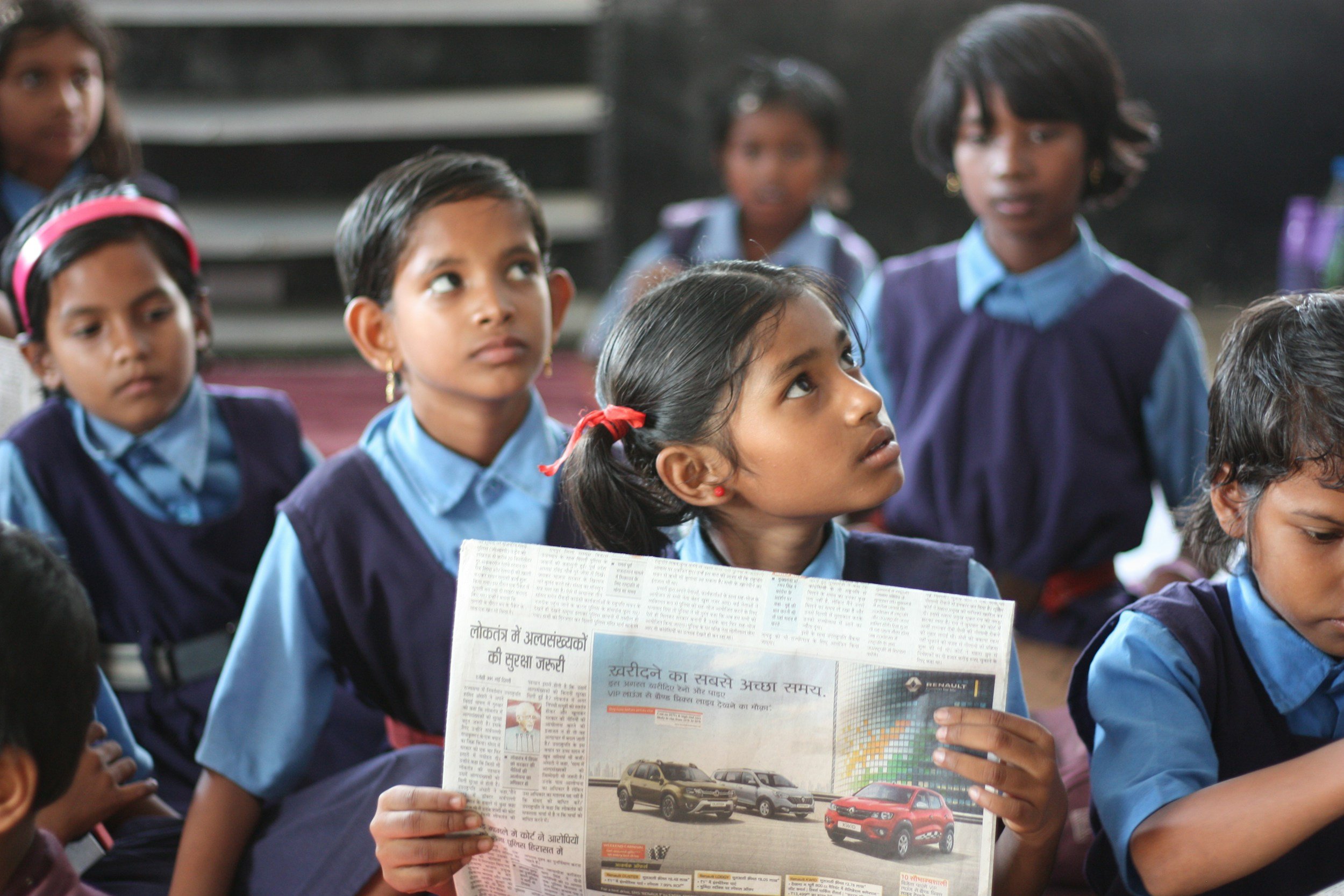
His criticism isn't directed at Sanskrit itself, but at whether preserving a language should come through compulsory education when students are also preparing for an increasingly global economy. The debate reflects a broader question that extends well beyond India: Can language preservation be legislated, or must it be chosen by the people who speak it?
Sometimes Preservation Means Making Space, Not Making Rules
Across the pond, I’ve understood an interesting contrast from my teammates in Singapore. Rather than requiring greater use of heritage languages, the country has begun reconsidering how much space should be given to Chinese dialects that have gradually declined over decades of bilingual education and the Speak Mandarin Campaign.
Recent parliamentary discussions surrounding the Teochew-language film Dear You have shifted the conversation away from the question of whether dialects compete with Mandarin. Instead, dialects are increasingly viewed as repositories of cultural memory, valuable not because they are everyday working languages but because they connect younger Singaporeans with family history, community traditions, and earlier generations.
As The Straits Times, the local newspaper, observed, the government appears to be pursuing a measured approach: maintaining Mandarin's role as the common language while selectively expanding opportunities for dialects in cultural contexts. It is less about reversing history than recognizing that heritage and practicality can coexist.
Singlish Shows That Languages Don't Stand Still
Perhaps the strongest evidence that languages naturally reinvent themselves comes not from government policy, but from everyday conversation. Associate Professor Tan Ying Ying of Nanyang Technological University claims that the Singlish spoken by younger Singaporeans is becoming fundamentally different from the Singlish many of their grandparents grew up with. Older generations comfortably use expressions rooted in Bazaar Malay and Southern Chinese languages, such as angkat, mata, taiko, and samseng. Younger speakers increasingly mix traditional Singlish particles such as lah and lor with internet-driven vocabulary like slay, lowkey, legit and cooked.

The change isn't simply about slang but reflects a transformation in Singapore's linguistic landscape. English now dominates education, workplaces, and many homes, while Hokkien, Teochew, and Bazaar Malay play a much smaller role in everyday life than they once did.
As Tan notes: "Language change is normal and is to be expected of all languages." Viewed through that lens, Singlish is not disappearing. It is evolving alongside the society that speaks it. The version spoken fifty years from now may sound unfamiliar to today's Singaporeans yet still serve the same purpose: expressing a uniquely Singaporean identity.
Perhaps We Should Stop Asking Whether Languages Are Being Lost
The instinct to preserve language is understandable. Languages hold stories that cannot easily be translated. They shape humor, relationships, values, and ways of seeing the world. Losing them can feel like losing a piece of collective identity.
But preservation does not necessarily mean resisting change. Sometimes it means documenting history, and sometimes it means creating space for older generations to share their stories. Other times, it is about recognizing that younger speakers will inevitably reshape a language to reflect their own experiences. The challenge is not deciding whether languages should evolve but deciding which parts of our linguistic heritage deserve to travel with them in the future.
What This Means for Localization
For businesses communicating across cultures, these conversations offer an important reminder: Language is not a static asset. It shifts with generations, social movements, technology, and changing cultural identities. Effective localization, therefore, requires more than accurately translating words. It means understanding how audiences communicate today, while recognizing that the language they use tomorrow may be different again.
Brands that rely on outdated expressions risk sounding disconnected. Those that embrace linguistic change without understanding cultural context risk losing authenticity. The most successful global communication strikes a balance between the two: respecting a language's heritage while speaking in a voice that feels current, natural, and locally meaningful.
After all, language isn't preserved because it never changes. It is preserved because every generation finds a new way to make it their own.

About the Author
Nicholas Irving is the Director of Business Development (Americas) with Flynde, a global company providing translation solutions to businesses of all sizes.
Discover the best-in-class translation solutions for your business. Trusted & certified for all languages with locations in Singapore, Switzerland & the USA. Flynde takes human translation strategies and uses advanced technologies to deliver them to our customers across our three business lines: Flynde for startups, Flynde for small businesses, and Flynde for corporations.
For more information, contact us at hello@flynde.com