When Language Gets Too Easy, What Do We Lose?
As a parent to two 11-year-olds, I have become deeply acquainted with homework. There are books spread across the dining table, half-finished worksheets, questions that somehow become arguments, and the occasional moment when I wonder how two children can generate quite so much noise while supposedly studying. Watching them learn has also made me think about how I learned. When I was their age, reading a difficult book was simply part of the bargain. Every time I came across a new word, I re-read the sentence again, and, if I still didn't understand it, I carried on. Sometimes an entire paragraph refused to make sense until three paragraphs later, when something suddenly clicked.
There wasn’t an app to explain it, nor a chatbot to rewrite it. I truly struggled with it, and perhaps all that was part of the education.
A recent Atlantic article, The Age of Reading Is Over, asks what happens when a society gradually loses its appetite for sustained reading. The article describes declining reading habits, shorter attention spans, and the rise of mini videos. However, what intrigued me was how a Harvard student struggling with Anthony Burgess's A Clockwork Orange used ChatGPT to make the novel easier to understand. To avoid wrestling with a difficult passage when a machine can make it immediately accessible is to abandon the whole idea of education.
The same logic applies when artificial intelligence is being used for translation. An AI system could almost instantly provide a perfectly serviceable translation. However, the added value of a human translator also includes the readers, where it would appear whether it’d fit an illustration on a poster, a digital screen, or a video, and most importantly, it’d sound like something a real person would say.
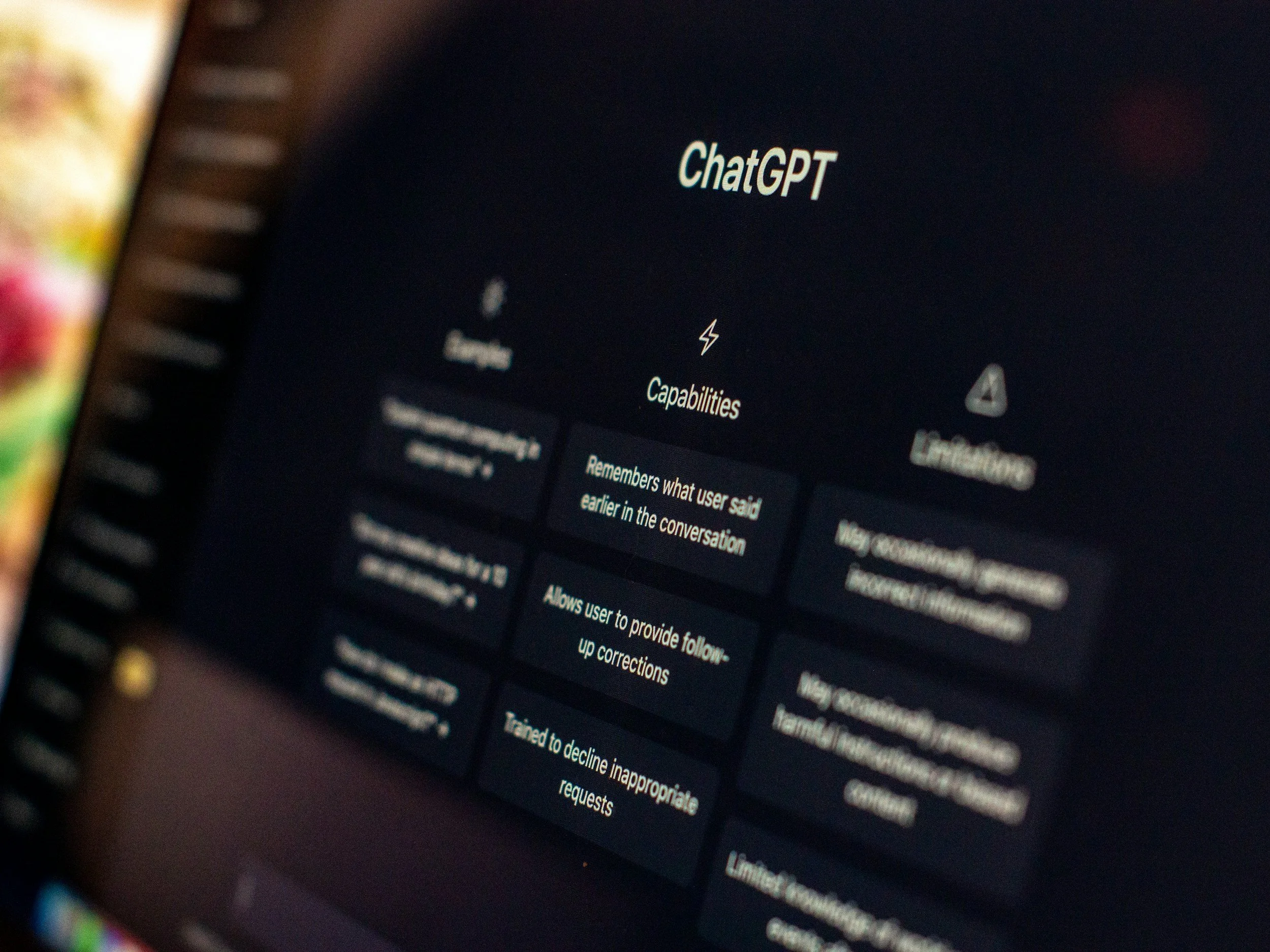
We conducted a test between ChatGPT and an Indonesian human translator, both given the same instruction to translate a safety message: “Walking under or near suspended loads poses a risk. Make the safe choice.” ChatGPT’s output was “Berjalan di bawah atau di dekat beban yang digantung menimbulkan risiko. Pilihlah cara yang aman.” The human translator’s output was “Berjalan di bawah atau di sekitar beban yang tergantung dapat membahayakan. Pilihlah tindakan yang aman.”
The analysis of both versions delivered interesting results. ChatGPT had the direct translation accurate to the core. For instance, “di dekat” is more precise than “di sekitar” and true to the English source, which was "near." However, the human translator’s version of “beban yang tergantung” is more natural than “beban yang digantung” for a suspended load. “Menimbulkan risiko” is semantically closer to “is a risk” than “dapat membahayakan,” although the latter is stronger and still natural in safety communications. For the CTA, “Pilihlah tindakan yang aman” is more campaign-appropriate than “Pilihlah cara yang aman."
All in all, the human translator delivered the stronger version as it factored in context, usage, and circumstances. ChatGPT had none of that information incorporated, despite identical instructions being delivered to both parties.
The danger, then, isn't necessarily that AI will produce a bad translation. It is that it can produce a translation that looks good enough to pass. Someone can paste it into ChatGPT, have another person read it and confirm that it makes sense, and walk away believing the job is done. But that can create a false positive: the words may be correct while the assumptions behind them have never been challenged. The human translator's "struggle," that is, thinking about the audience, context, visual setting, tone, and purpose, is what turns a plausible translation into one that works.

I see something similar with my own children. When they struggle with homework, it is tempting to give them the answer and move on. It would certainly be easier. But the struggle is how they learn to think, question, and solve problems for themselves. For businesses to succeed, preserving or incorporating some of that friction in processes could be a good thing. As AI makes producing words increasingly effortless, the value of the human who stops to ask, “Is this actually right?” may become greater, not less.

About the Author
Nicholas Irving is the Director of Business Development (Americas) with Flynde, a global company providing translation solutions to businesses of all sizes.
Discover the best-in-class translation solutions for your business. Trusted & certified for all languages, with locations in Singapore, Switzerland & the USA. Flynde takes human translation strategies and uses advanced technologies to deliver them to our customers across our three business lines: Flynde for startups, Flynde for small businesses, and Flynde for corporations.
For more information, contact us at hello@flynde.com