
Why Hari Raya Haji Feels Different This Year: Between Sacrifice, Survival and the Cost of Giving in Indonesia
For those unfamiliar with Islamic celebrations in Southeast Asia, a common question around this time of year is, "Didn't Indonesia just celebrate Hari Raya? What’s the difference?”
The confusion is understandable. Both Hari Raya Puasa (Eid al-Fitr / Idul Fitri) and Hari Raya Haji (Eid al-Adha / Idul Adha) are among the most significant dates in the Islamic calendar. Both bring families together. Both are marked by prayer, food, and tradition. Yet culturally, emotionally, and increasingly economically, they represent very different ideas.
Weeks after the exuberance of Hari Raya Puasa, when children receive cash-filled envelopes, workers collect annual holiday bonuses, and millions travel home for mudik reunions, Indonesia enters another festive period with a far quieter message.
Hari Raya Haji was never intended to be a season of receiving. Its origins lie in sacrifice, commemorating Prophet Ibrahim’s willingness to surrender what was most precious to him. The festival centers around Qurban, the slaughter and distribution of livestock to poorer communities. Giving is meant to flow downward toward need in a quiet, collective manner without any expectations.
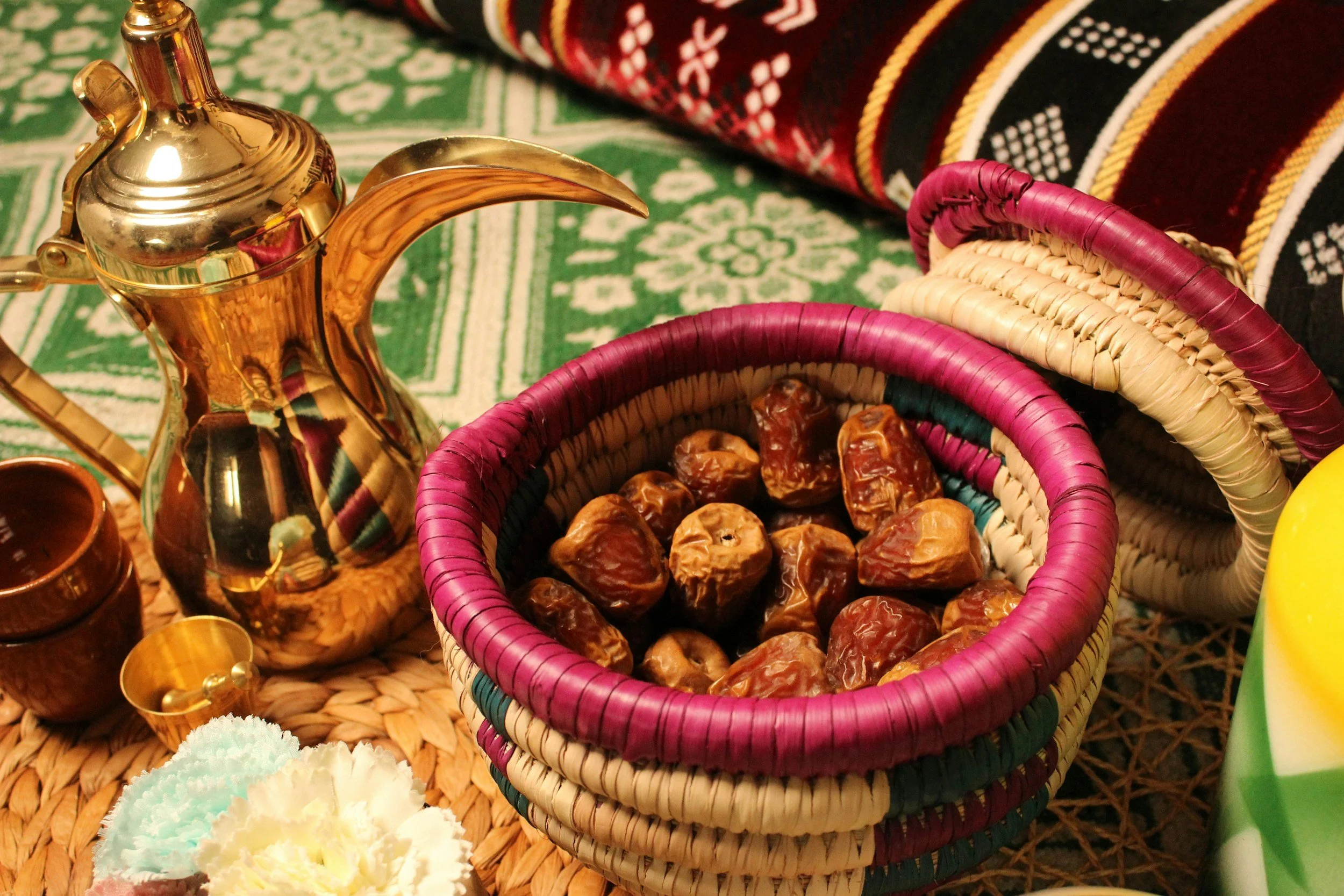
Traditionally, children do not expect money in envelopes. Employees do not receive THR (Tunjangan Hari Raya) bonuses. The “gift” often comes in the form of shared beef, goat, or mutton, distributed among neighbors and lower-income households. Sometimes it arrives as baskets containing rice, cooking oil, and daily essentials.
The holiday has historically emphasized restraint over reward, sacrifice over celebration.
Yet in modern Indonesia, shaped increasingly by economic anxiety, social media visibility, and rising costs of living, even generosity appears to carry new expectations.
When charity becomes content
This year, conversations around festive giving in Indonesia have exposed an uncomfortable question: “At what point does generosity stop being generosity and become expectation?”
The debate intensified after dangdut singer Dewi Perssik distributed cash and rice to thousands during festive giving. Recipients reportedly received IDR15,000 (around US$0.78) alongside bags of rice. Despite an overall aid distribution of nearly IDR900 million, criticism focused less on the act itself than on whether the amount was considered sufficient.

Her response reflected a growing frustration around public expectations: “If you want tens of millions (of rupiah), become my employee first.”
The episode highlighted a shift increasingly visible in Indonesia’s digital landscape: charity is no longer merely witnessed but ranked, compared, and debated.
Videos of celebrities handing out money, influencers staging festive cash-prize games, and crowds gathering outside wealthy households have become recurring online spectacles. Some recipients publicly express disappointment at receiving “too little." Others argue that even modest help remains meaningful.
The original religious ideal of sacrifice without expectation increasingly competes with a culture shaped by visibility, social media, and the pull of virality. Generosity, once private, now often unfolds before an audience. And audiences tend to expect more each year.
Indonesian sociologist Dr.Musni Umar described concerns about what some call mentalitas mengemis (“begging mentality”), in which repeated seasonal handouts may gradually reshape perceptions of generosity into entitlement, particularly during festive periods.
Yet reducing the phenomenon to greed alone risks oversimplifying reality, because behind many queues may lie something less about entitlement and more about survival.
Economic changes and the devaluation of the Rupiah
Indonesia enters Hari Raya Haji amid growing economic strain. The rupiah recently slid to a record low, weakening over 5% against the US dollar in 2026 (around 6% against the Singapore dollar), as inflation concerns, higher oil prices, and worries over fiscal stability continue to weigh on markets.
Imported goods are becoming more expensive. Energy costs are rippling through transport and food prices. Basic necessities stretch further against stagnant incomes, and families are recalculating their spending.
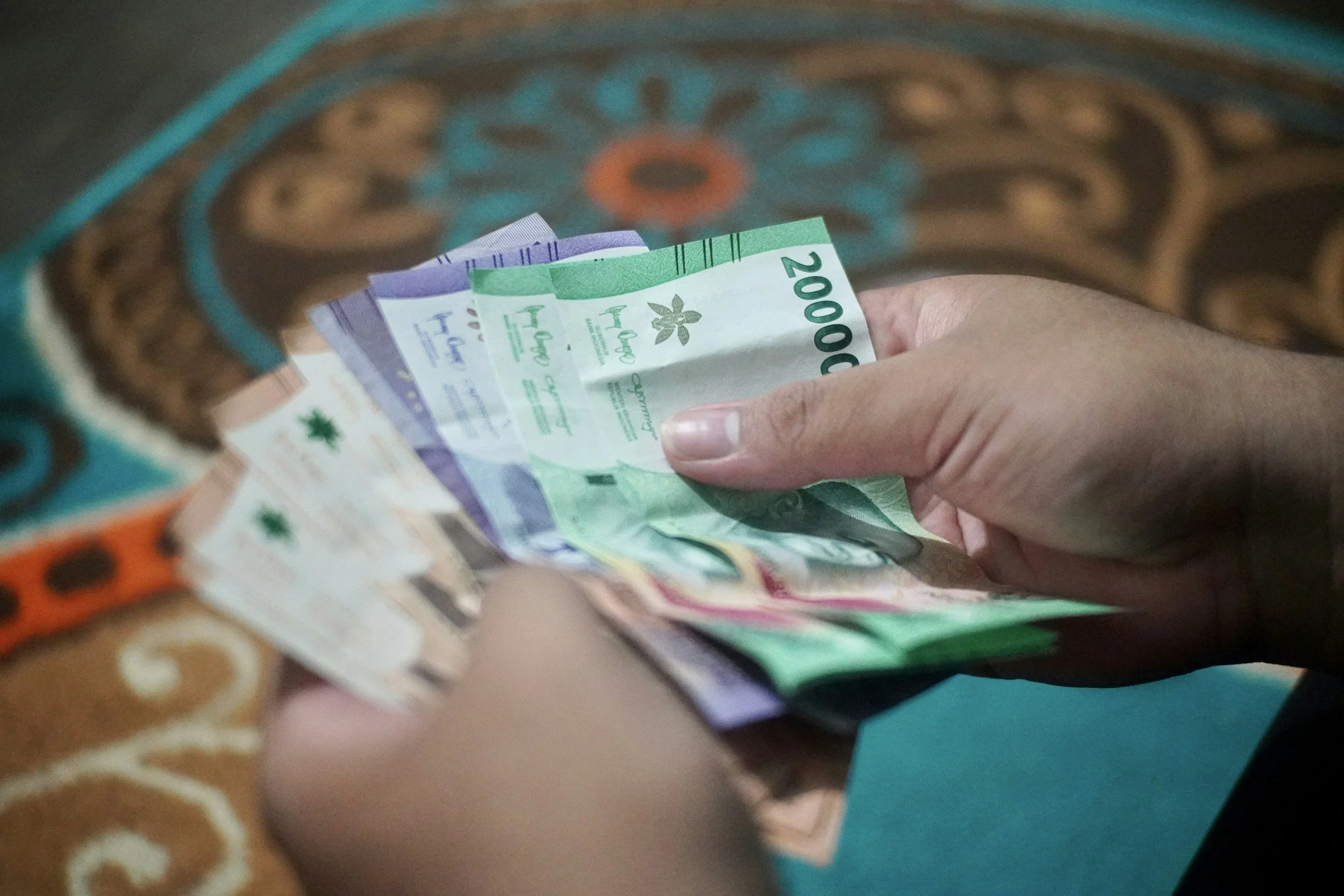
For lower-income communities, festive generosity may no longer feel symbolic but may instead help cover grocery costs. The official poverty line remains low, yet more than 23 million Indonesians live below it, making even small cash gifts materially significant.
In that context, public disappointment over festive handouts becomes harder to interpret.
When someone waits hours under the sun for IDR 50,000 and expresses frustration, the reaction may reveal less about greed and more about how financial pressures alter the meaning of assistance.
Symbolic gestures begin to take on practical meaning: a cash envelope helps cover groceries, a bag of rice becomes several meals, and Qurban meat offers temporary relief.
The quiet irony of Hari Raya Haji
Hari Raya Haji was built around surrendering attachment to material things. Yet contemporary conversations increasingly revolve around how much was given, who gave it, and whether it was enough.
In the age of social media, generosity rarely remains private. Corporate donations become campaign content. Influencers document charitable acts. Social feeds amplify giving, while recipients compare and observers comment in real time.
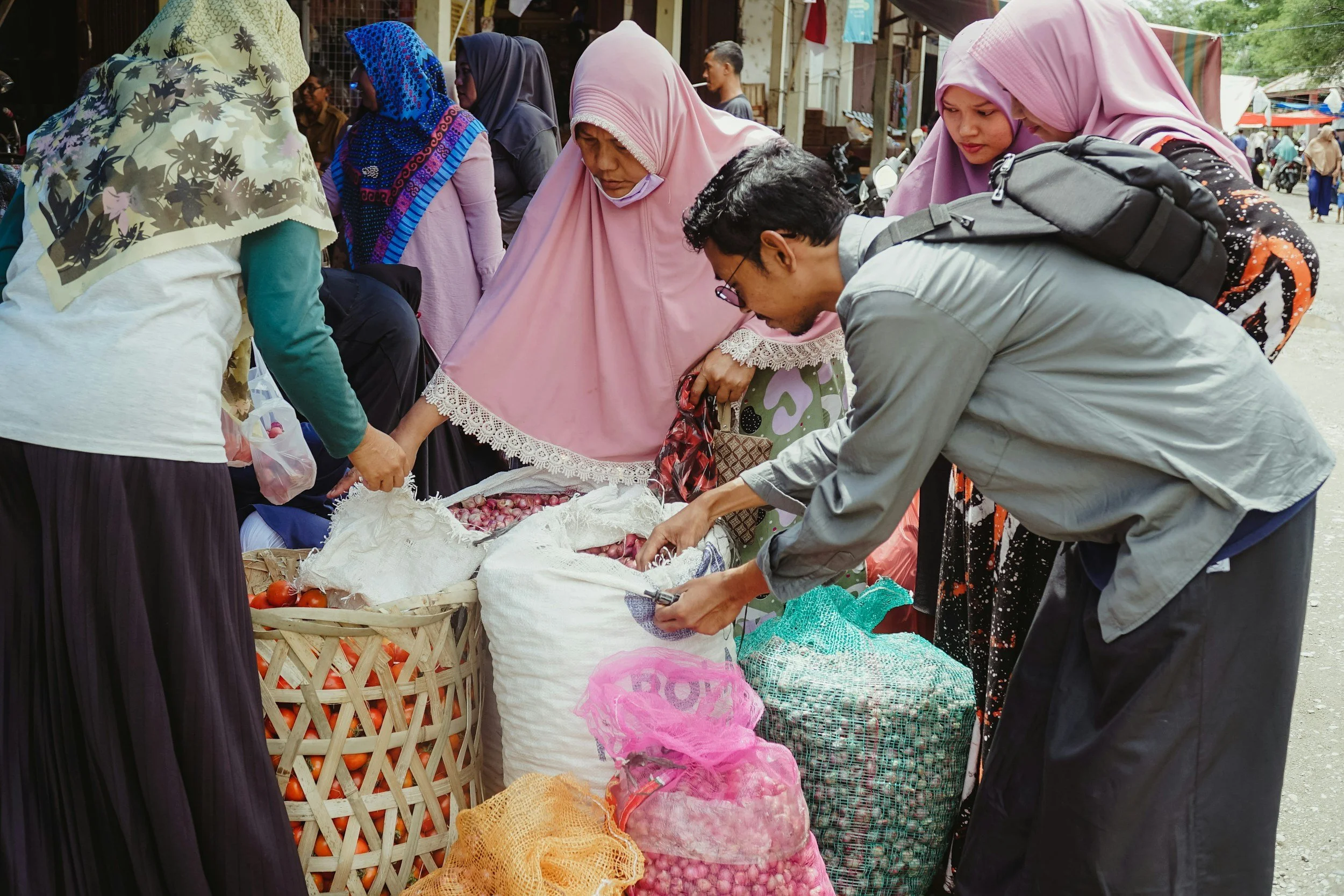
Visibility, in many ways, has become part of the ritual.
Algorithms reward spectacle. And the economics of attention are increasingly reshaping the economics of kindness.
None of this suggests that generosity is disappearing. Indonesia remains one of the world’s most charitable societies by many measures, supported by longstanding traditions of communal support (gotong royong) and religious giving.
But the meaning attached to generosity may be evolving. The question facing modern Indonesia is perhaps not whether people have become less generous, but whether generosity has become harder to separate from performance, particularly during periods of economic uncertainty.
Returning to the original purpose
As Hari Raya Haji approaches, the distinction between it and Hari Raya Puasa becomes clearer. While Hari Raya Puasa celebrates reunion, reward, and abundance after restraint, Hari Raya Haji asks something more uncomfortable: what are people willing to surrender (expectation, excess, status, and pride) for the benefit of others?
In an Indonesia shaped by currency weakness, rising costs, and more public acts of charity, that question feels newly relevant.
Sacrifice was never solely about giving more. In uncertain times, it may also involve expecting less.

About the Author
Colin Drysdale is the Chief Strategy Officer with Flynde, a global company providing translation solutions to businesses of all sizes.
Discover the best-in-class translation solutions for your business. Trusted & certified for all languages with locations in Singapore, Switzerland & the USA. Flynde takes human translation strategies and uses advanced technologies to deliver them to our customers across our three business lines: Flynde for startups, Flynde for small businesses, and Flynde for corporations.
For more information, contact us at hello@flynde.com