When Letters Change History: The Ultimate Global Script Rebrand

Bert Nguyen
Associate Language Manager and Copywriter at Flynde
Imagine walking up tomorrow and discovering your boss has decided the entire company is switching from Latin letters to Morse code. By Monday. No exceptions, no transition period, just immediate compliance. While you may think that sounds like a corporate nightmare destined for a viral Glassdoor review, this radical "rebranding" of the written word has actually happened to entire nations. Throughout the last few centuries, the world has seen several "orthographic revolutions" where changing a script wasn't just about choosing a new font. It was a high-stakes tool for social engineering, mass literacy, and the claim of national sovereignty.
The king’s new alphabet
The most famous of these linguistic "disruptors" was likely King Sejong the Great of 15th-century Korea. At the time, if you wanted to be anyone in the Joseon Dynasty, you had to spend decades mastering Hanja. That comprises thousands of complex Chinese characters, creating a massive "literacy wall" between the elite and the commoners. Sejong (dare I say he was essentially a 15th-century UX designer) realized his people couldn't seek legal justice because they literally couldn't read the laws.
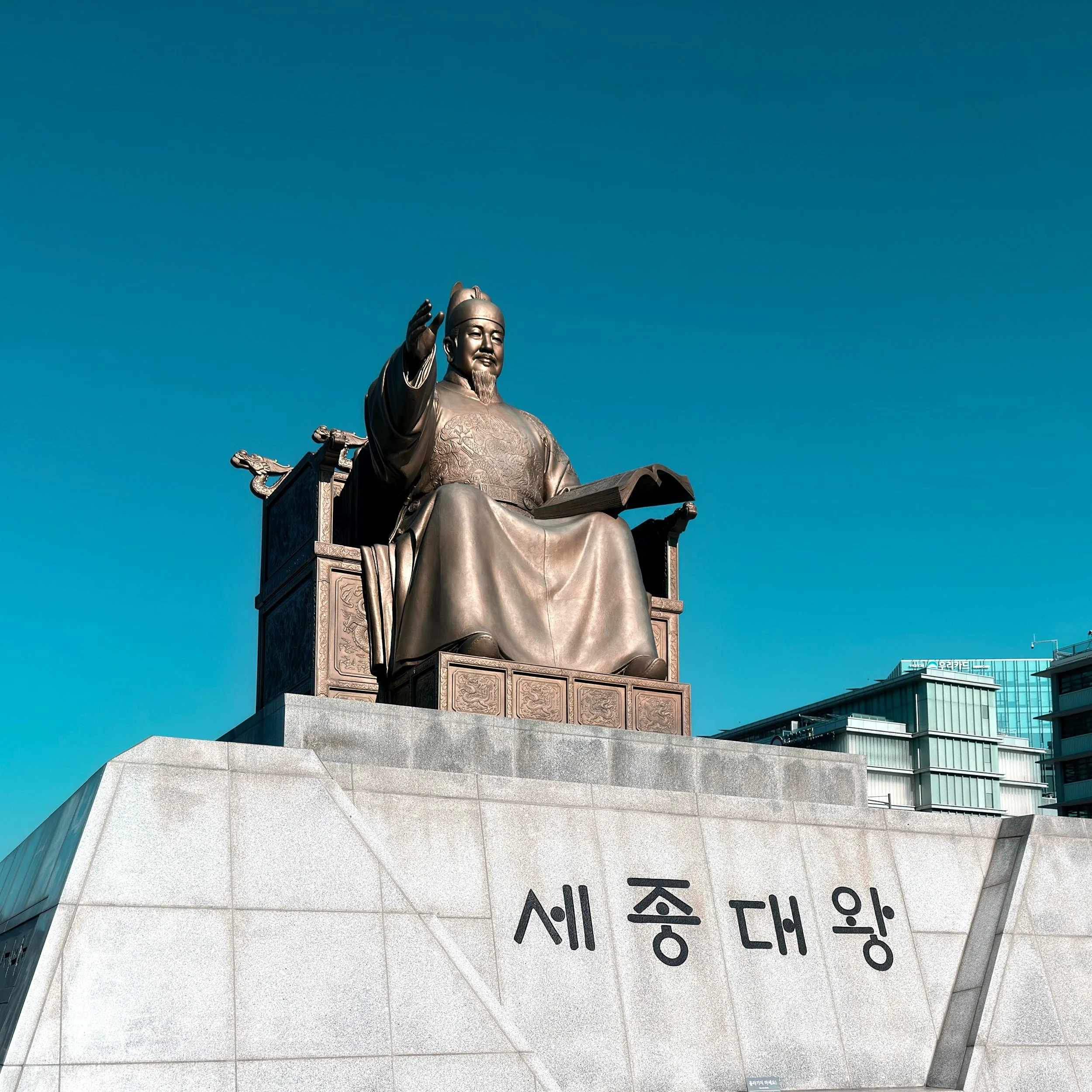
The statue of King Sejong in Seoul (South Korea)
To fix this, he commissioned a scientific alphabet called Hangeul, where the consonants were designed to mimic the physical shape of the tongue and mouth during speech. While the aristocrats scoffed at it as a "vulgar script" and tried to relegate it to women’s circles, the ease of the system eventually won out. Wise men could learn it in a morning, and even the "uneducated" could master it in ten days. This single move eventually powered a literacy miracle, reducing Korea's illiteracy rate from 77.8% in 1945 to near-universal literacy today.
But hold on for a second: Hanja is still in use and can be found throughout Korea. They are often used to write personal or place names to evoke formality. For example, Gong Yoo, the actor you may have known for his role as The Recruiter in the Squid Game series, may write his name casually in Hangeul as 공유 or more formally as 孔劉 in Hanja. Interestingly, he shares the same surname as Confucius.
Old wine in a new bottle
Vietnam’s script history reads more like a geopolitical thriller with multiple plot twists. For over a millennium, Vietnam relied on Hán tự (Classical Chinese) before developing Chữ Nôm, a complex system that adapted Chinese characters to represent the Vietnamese vernacular.
However, the real "system update" arrived in the 17th century when European missionaries created a Latinized script, Quốc ngữ, to facilitate their work. In a fascinating historical irony, the French colonial administration later promoted this Latin script to weaken the influence of the Chinese-educated Mandarin class, only for Vietnamese nationalists to seize that same script as a weapon of resistance.
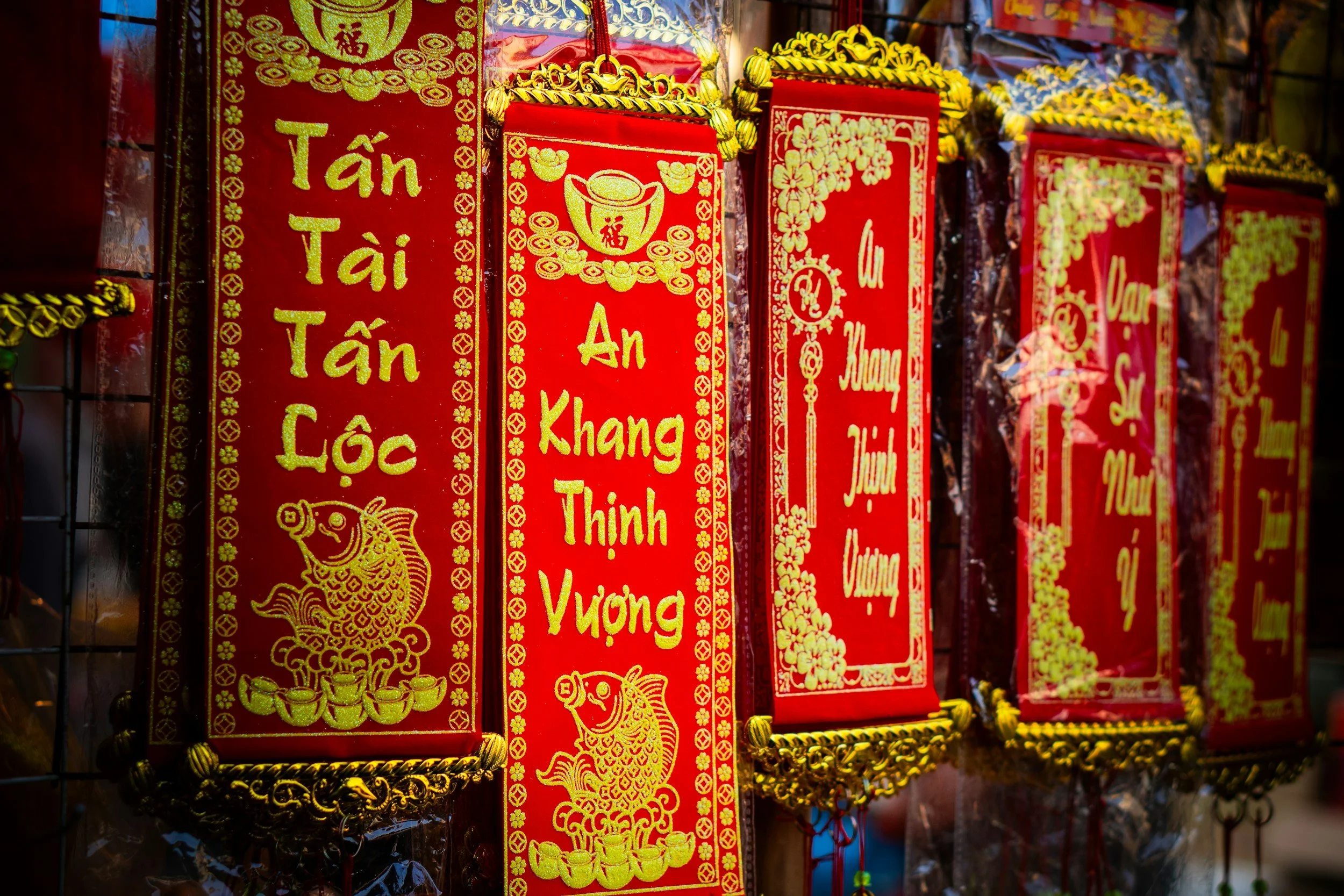
Vietnamese New Year's Festival scrolls using the Latin alphabet instead of Classical Chinese writing.
By 1945, the government recognized that mass literacy was the only way to safeguard independence, launching a campaign that taught three million people to read in a single year. The simple, straightforward link between orthography and pronunciation helped Vietnam effectively eradicate illiteracy. Take my native name as an example. In Hán tự, it’s written as 維, which would be far too complicated for a population made up mostly of farmers and peasants. Instead, it’s Latinized as Duy. Boom! Now it’s just three letters, with a clear hint of how to pronounce it.
Today, the script is a powerful symbol of Vietnamese adaptability, though it has left a "historical veil" between modern citizens and the centuries of literature written in the older characters.
A better fit for the national language
In Turkey, the transition was perhaps the most aggressive in modern history. Following the 1923 establishment of the Republic, Mustafa Kemal Atatürk viewed the Arabic script as ill-suited to the Turkish language, a Semitic system meant to represent a Turkic tongue that relied heavily on eight distinct vowels.
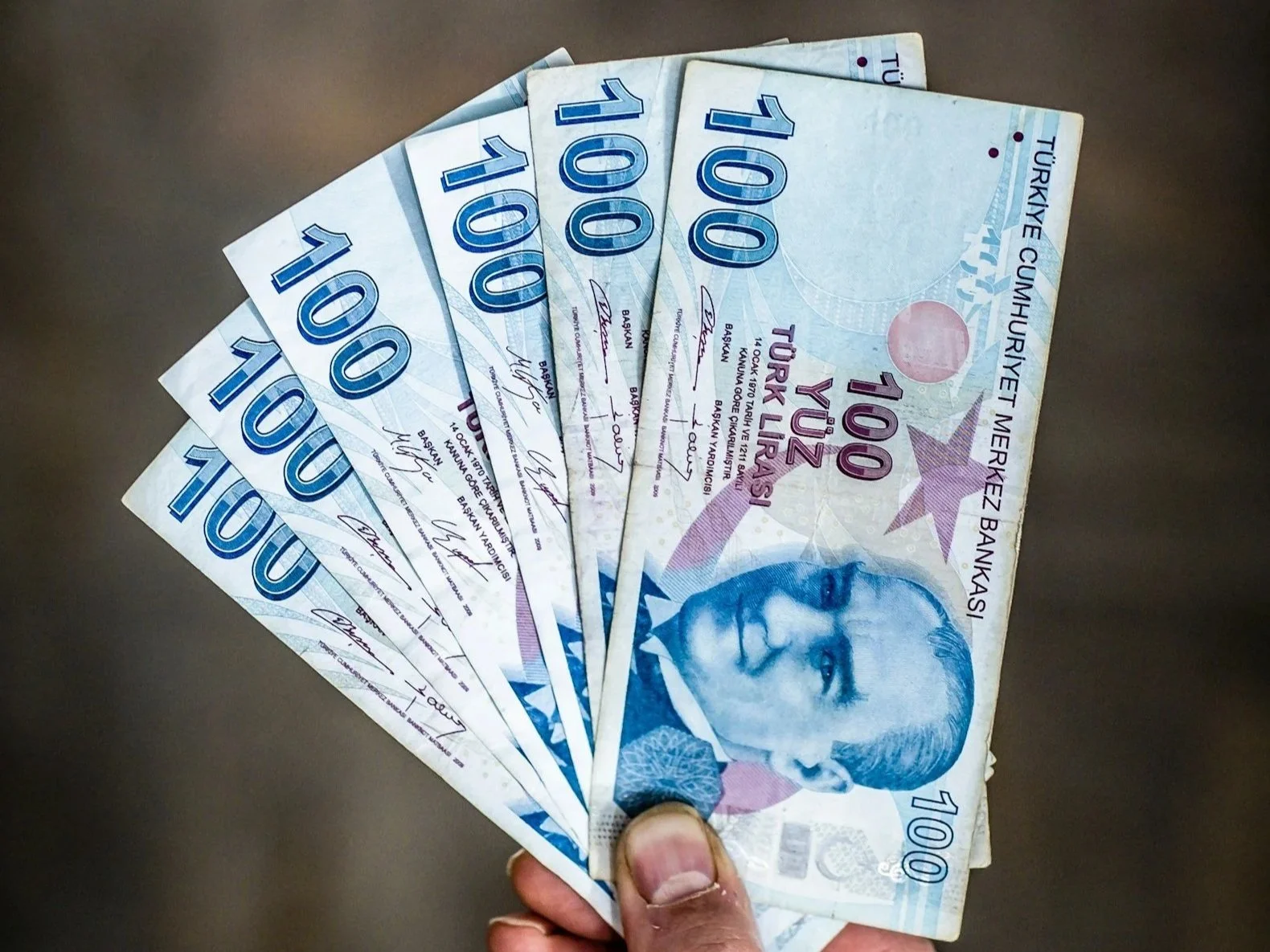
Turkish lira banknotes with modern Turkish script.
When a commission suggested a transition period of fifteen years, Atatürk famously declared that the change would be done in three months or never. He personally travelled the country with a blackboard and chalk, teaching the new Latin letters in public squares as if he were leading a nationwide workshop.
The results were staggering; literacy rates doubled in less than a decade, jumping from 10.5%in 1927 to 20.4%by 1935. However, this "clean break" from the past also meant that millions of Ottoman documents became practically illegible to future generations, a gap that modern Turkish AI projects are now desperately trying to bridge.
Why can’t we have both?
Now we look to the steppes of Mongolia, where script has long been a geopolitical tug-of-war. For seven centuries, the nation used the vertical Mongol bichig, a stunningly beautiful script adapted from Old Uyghur. But as Mongolia became a Soviet satellite in the 20th century, the script was viewed as a barrier to modernization and a dangerous link to traditional Buddhist culture.
Under Moscow’s pressure, Mongolia adopted the Cyrillic alphabet in 1941, which successfully boosted literacy but severed the continuity of its vertical literary heritage. Today, Mongolia is staging one of the most ambitious "heritage comebacks" in history. By 2025, the government plans to fully implement a dual-script policy, reintroducing the vertical traditional script alongside Cyrillic in official documents and public life.
What can modern leaders learn from these alphabet revolutions? First, accessibility is the ultimate power; when you simplify the medium, you empower the masses. Second, identity is rarely neutral. The choice of how we communicate signals exactly where we intend to go as a culture. Bear in mind that every change comes with a cost. While these nations achieved incredible leaps in literacy, they all had to reckon with a "historical rift" that left their ancestors’ words locked in a code that few can now break.
The next time you find a task "difficult to read," just remember Atatürk with his blackboard or Sejong at his desk, and be grateful your boss isn't asking you to learn a new alphabet by Monday.
COFFEE WITH BERT
This is to bring you the richness of global traditions straight to your desktop.
Join Bert Nguyen - one of our copywriters, as we journey beyond borders—celebrating diversity, bridging cultures, and uncovering the stories, places, and people that make our world so fascinating.
