
The wait is over, and the FIFA World Cup is set to take place in Canada, the US, and Mexico this June. Association football, which some might glory in as the king of sports, has evolved from a nineteenth-century pastime into a multi-billion-dollar global industry. At the heart of this empire is the FIFA World Cup, a tournament that doesn’t just crown a champion every four years; it serves as a masterclass in modern marketing, brand protection, and digital evolution.
From small beginnings to a billion-dollar powerhouse
FIFA was founded in a modest Paris office in 1904 by representatives from just seven European countries. For decades, it remained a relatively quiet administrative body. The real shift toward the commercial juggernaut we see today began in the 1970s under the leadership of João Havelange. He realized that to grow the game globally, FIFA needed more than just passion. Indeed, it needed professionalized corporate partnerships.

Football, and sports in general, are a gold mine for brands to advertise themselves.
Havelange forged a transformative alliance with Horst Dassler of Adidas, pioneering the model of exclusive global sponsorships we take for granted today. Fast forward to the 2019–2022 cycle, and the numbers are staggering. The Qatar World Cup generated a record-breaking $7.57 billion in revenue, an 18% jump from the previous cycle.
How the money works
All of that is built on a "scarcity model" designed to drive up value through exclusivity. First and foremost, broadcasting rights are the primary engine, bringing in $3.43 billion (roughly 45% of total revenue) in the last cycle. Networks like Fox pay hundreds of millions because live football is one of the few things people still watch in real-time.
Secondly, FIFA uses a three-tier system that resembles a pyramid. At the top are "FIFA Partners" like Coca-Cola and Visa, who get year-round global rights. Below them are "World Cup Sponsors" like McDonald's, followed by "Regional Supporters" who focus on specific markets.
Lastly, everything from video games to Panini stickers brings in hundreds of millions. In fact, licensing alone contributed $769 million in the last cycle.
The “Clean Zone”
Because official sponsors pay such high prices, often in the nine-figure range, FIFA is famously protective of its rights. To prevent "ambush marketing" (where non-sponsors try to associate with the event for free), they enforce strict "clean zones."
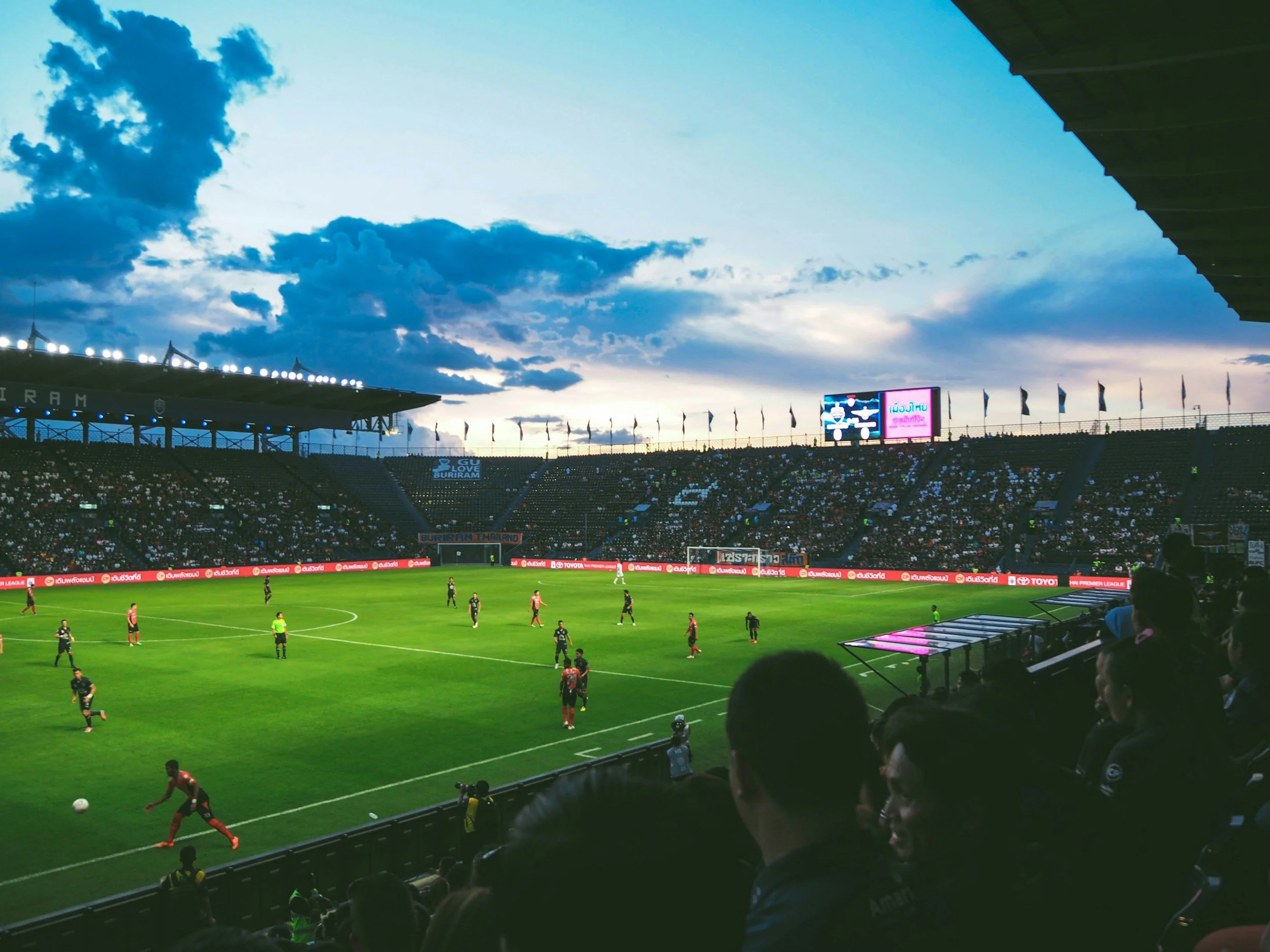
Policies like the “Clean Zone” aim at preventing soccer from being overcommercialized.
Typically, for a 2-kilometre radius around stadiums, no unauthorized branding or promotional handouts are allowed. In 2010, this led to a massive media storm when 36 women in orange dresses were ejected from a match because their outfits were part of a promotion for Bavaria Beer, a rival to the official sponsor, Budweiser. Similarly, FIFA now bans players from wearing non-sponsor headphones in stadiums after Beats by Dre successfully "ambushed" the 2014 tournament with a viral digital campaign.
More than just feet and a ball
One of the most exciting shifts in the marketing landscape is the "unbundling" of the Women’s World Cup. For the first time in 2023, FIFA sold the broadcasting and sponsorship rights for the women’s tournament as a standalone product. The results were historic: commercial partnerships grew by over 100%, and the tournament contributed an estimated $1.9 billion to global GDP.
Marketing has moved beyond the 90 minutes on the pitch. FIFA recently named TikTok its "Preferred Platform" for the 2026 World Cup, recognizing that younger fans are 42% more likely to watch a live match after seeing content on the app. This strategy focuses on "behind-the-scenes" access and creator-led stories rather than just game highlights.
FIFA picked TikTok as the main social media for the World Cup 2026 as a way to access younger fans across the globe.
However, one should exercise caution when advertising at football events. For host nations, the marketing is a "soft power" play, a chance to show the world they are open for tourism and business. However, it comes at a high price. Beyond the multi-billion-dollar construction costs, "White Elephant" stadiums often sit empty after the final whistle, costing between $6 million and $10 million annually just to maintain.
Looking toward 2026
The 2026 World Cup across Canada, Mexico, and the United States will be the largest ever, expanding to 48 teams and 104 matches. It’s a tri-national commercial ecosystem that will allow brands to target fans at a local city level in three of the world’s biggest economies. From digital betting integration to "sonic branding" (think catchier anthems like Shakira's "Waka Waka"), the 2026 cycle is expected to shatter every financial record once again.
Ultimately, football's marketing success lies in its ability to speak a "universal language". Whether it’s through a TikTok clip, a viral ad, or a heartwarming player-escort program, the World Cup ensures that even if you aren't a die-hard fan, you’re still a part of the conversation.

About the Author
Bert Nguyen is a Copywriter with Flynde, a global company specializing in translation solutions for businesses of all sizes.
Discover the best-in-class translation solutions for your business. Trusted & certified for all languages with locations in Australia, Singapore, Switzerland & the USA. Flynde takes human translation strategies and uses advanced technologies to deliver them to our customers across our three business lines: Flynde for startups, Flynde for small businesses, and Flynde for corporations.
For more information, contact us at hello@flynde.com