
The Voyager You Don’t Know About: How Jeanne Baret Disguised Herself as a Man to Sail the World

Bert Nguyen
Associate Language Manager and Copywriter at Flynde
In early 2026, a man named Dallas Pokornik, a 33-year-old flight attendant of Toronto, was arrested in Panama after he had posed as a pilot and got hundreds of free flights. If this sounds familiar to you, chances are you have watched that movie featuring Leonardo DiCaprio as Frank W. Abagnale, a conman-turned-security consultant who pretended to be a Pan Am pilot.
But not all passing and faux-dress are for bad causes. Indeed, this one is very much inspiring.
Now, imagine your pre-trip checklist included binding your chest tight enough to restrict breathing, lowering your speaking voice an octave, and preparing to maintain a lethal level of deception nearly 24 hours a day for three years. And did I mention that if you get caught, you face imprisonment, public shame, or worse?
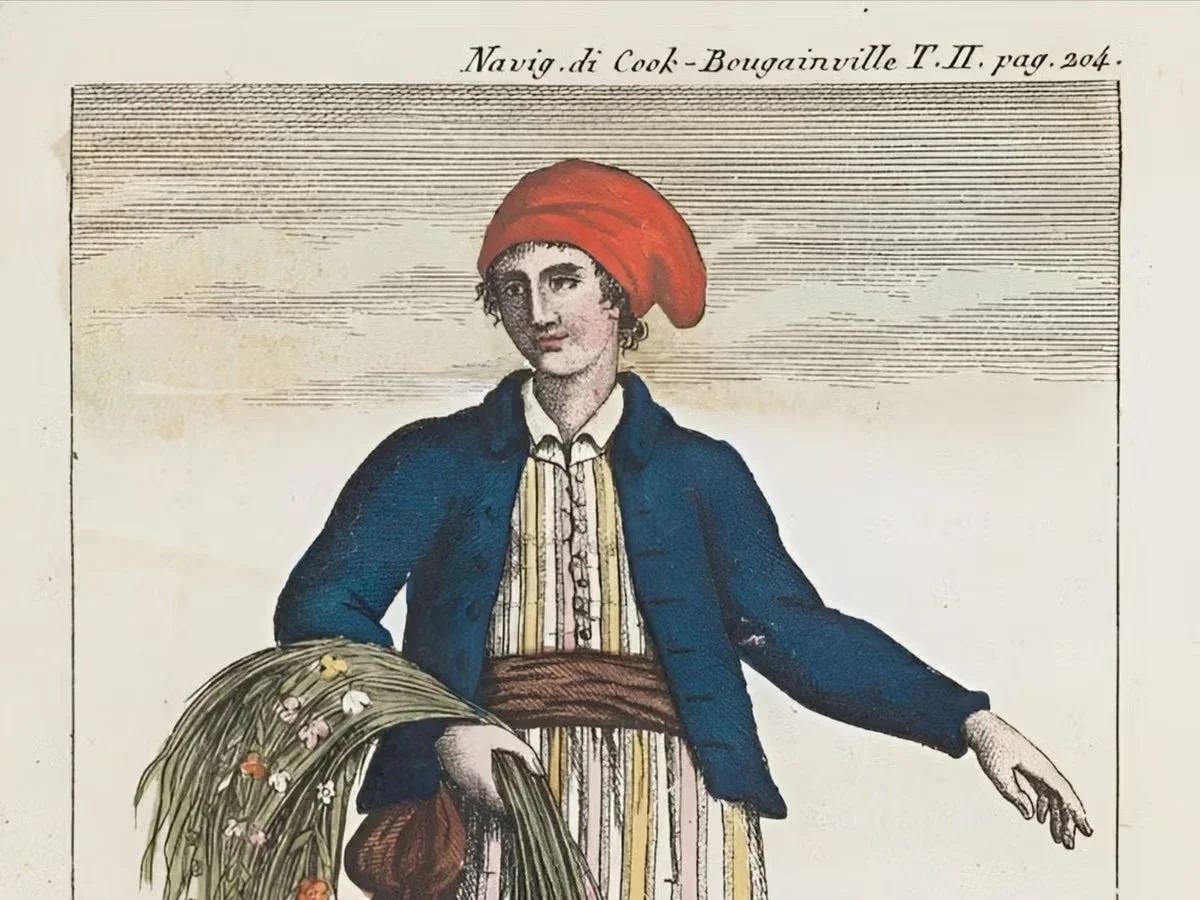
Jeanne Baret by Giuseppe dall’Acqua (1816)
This was the life of Jeanne Baret, an 18th-century French herb woman who decided that the giant "No Girls Allowed" sign hanging over the field of global exploration was merely a suggestion. In doing so, she became the first woman in recorded history to circumnavigate the globe.
Her story is a masterclass in audacity, resilience, and the original "fake it 'til you make it" hustle. It’s a tale that resonates powerfully today, reminding us that sometimes, to get a seat at the table (or on the boat), you have to build your own chair, sometimes even disguising it entirely.
The setup: A radical idea
The year was 1766. The Enlightenment was in full swing in France, yet the illumination hadn't quite reached the realm of gender equality. Women’s roles were rigidly defined: domestic, decorative, or subservient.
Enter Jeanne Baret. She was the housekeeper, assistant, and likely lover of Philibert Commerson, a brilliant but sickly botanist. When Commerson was appointed the official naturalist for Louis Antoine de Bougainville’s grand expedition to circle the globe, he desperately needed his assistant. But a Royal Ordinance explicitly forbade women from travelling on French navy ships.
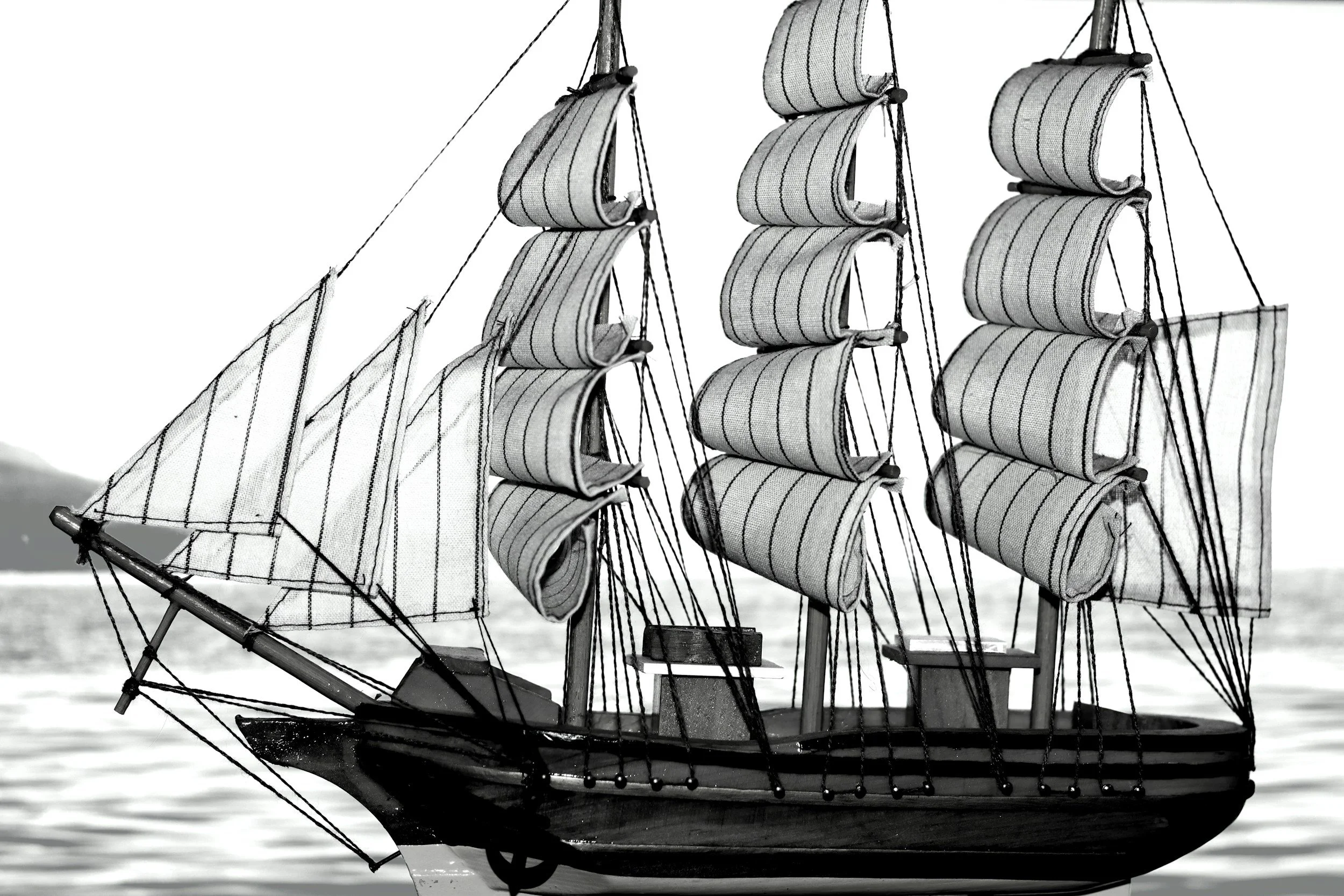
A Fluyt vessel similar to L’Étoile
Most people would have accepted defeat. Baret and Commerson accepted a challenge.
They hatched a plan so daring it bordered on the ridiculous. They would arrive at the port separately just before departure. Jeanne would adopt the persona of "Jean" Baret—a young, eager male valet ready to serve the naturalist.
Living the lie on the high seas
For nearly two years, the ruse worked.
Life aboard the ship L'Étoile was gruelling. It was cramped, filthy, and lacked any semblance of privacy. Yet, "Jean" Baret thrived. She didn't just hide in the shadows; she outworked the men.
When the expedition made landfall in exotic locations like Brazil and Patagonia to collect specimens, Commerson was often too ill to leave the ship. It was Baret, burdened by heavy equipment, cumbersome 18th-century male clothing, and the crushing heat, who trekked into jungles and scaled mountains.
She collected hundreds of new plant species, documenting and pressing them. In Rio de Janeiro, they discovered a vibrant, vine-like plant with brilliant magenta bracts. Commerson named it Bougainvillea, after the expedition's captain. But history suggests it was almost certainly Jeanne Baret who first laid eyes on the flower that now adorns gardens worldwide.

A branch of bougainvillea
This is where her story becomes profoundly empowering. Baret wasn't just a stowaway tagging along for romance. She was a capable, physically robust scientist in her own right, doing the literal heavy lifting in an era that claimed women were constitutionally incapable of such things. She was performing masculinity better than many of the actual men on board, all while living under the constant, terrifying stress of being discovered.
The unravelling and the legacy
The game couldn't last forever. The accounts of her discovery vary. Some say the crew grew suspicious of her smooth chin and refusal to relieve herself with the others. The most dramatic (and popular) account is that when the expedition landed in Tahiti in 1768, the indigenous Tahitians took one look at "Jean" and immediately recognized her as a woman, creating a chaotic scene on the beach.
The jig was up. Captain Bougainville, to his credit, was more impressed than angry. He later wrote in his journals, "How could I expect to find a woman, and such a woman, among the crew of a storeship, in the midst of such hardships?"
Baret and Commerson were eventually disembarked at the French colony of Mauritius in the Indian Ocean. Commerson died there a few years later. Jeanne, demonstrating her characteristic grit, eventually married a French soldier and completed her long journey back to France in 1775, closing the circle she had begun nearly a decade earlier.
Jeanne Baret didn't set out to be a feminist icon. She just wanted to do her job and see the world. But in refusing to accept the boundaries placed upon her sex, she shattered a glass ceiling before the concept even existed.
Today, her story is a fun, thrilling reminder that barriers are often constructed by society, not biology. Jeanne Baret proved that capability has no gender. She taught us that if the world tells you you can't go on an adventure, sometimes you just have to put on some trousers, lower your voice, and sail away anyway.
COFFEE WITH BERT
This is to bring you the richness of global traditions straight to your desktop.
Join Bert Nguyen - one of our copywriters, as we journey beyond borders—celebrating diversity, bridging cultures, and uncovering the stories, places, and people that make our world so fascinating.
